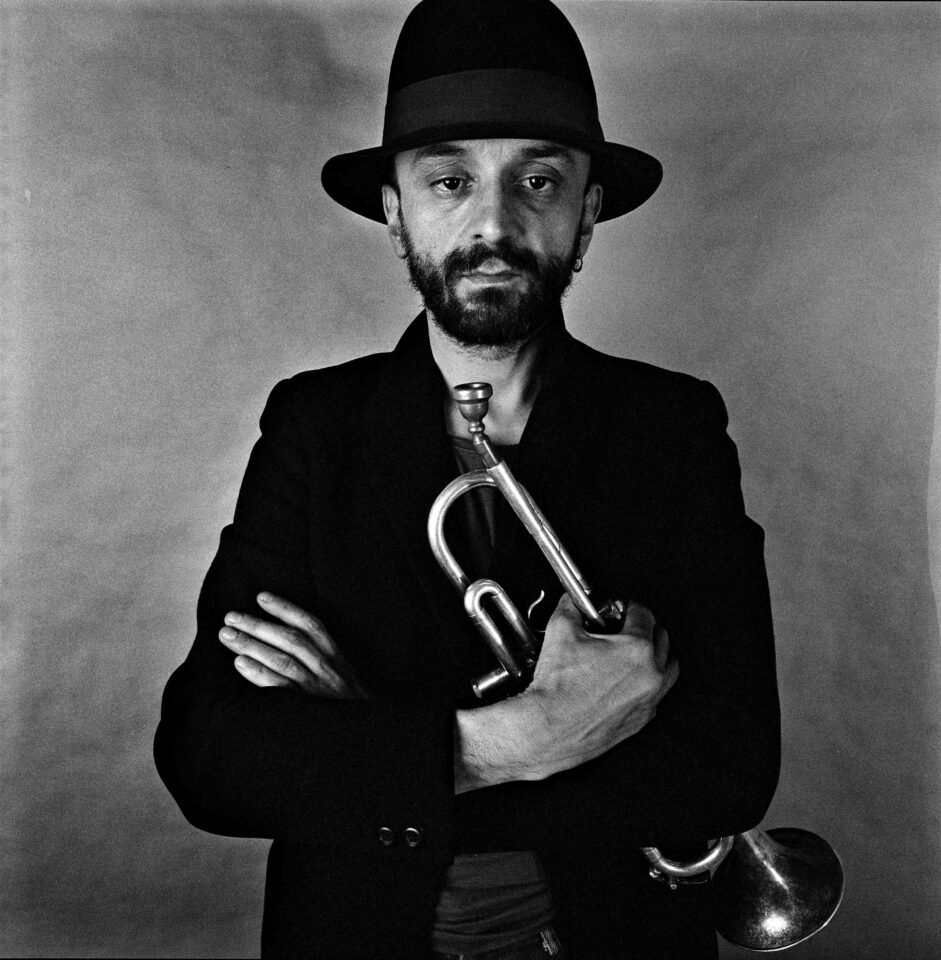
Of all Polish jazzmen, Tomasz Stańko had the greatest influence on the contemporary sound and tone of our local Polish scene. Considering his transnational achievements, media visibility and the way he would think and carry himself, rather than just play, this sentence may sound like a truism. However, the reasons for this are incomparably deeper, almost metaphysical.
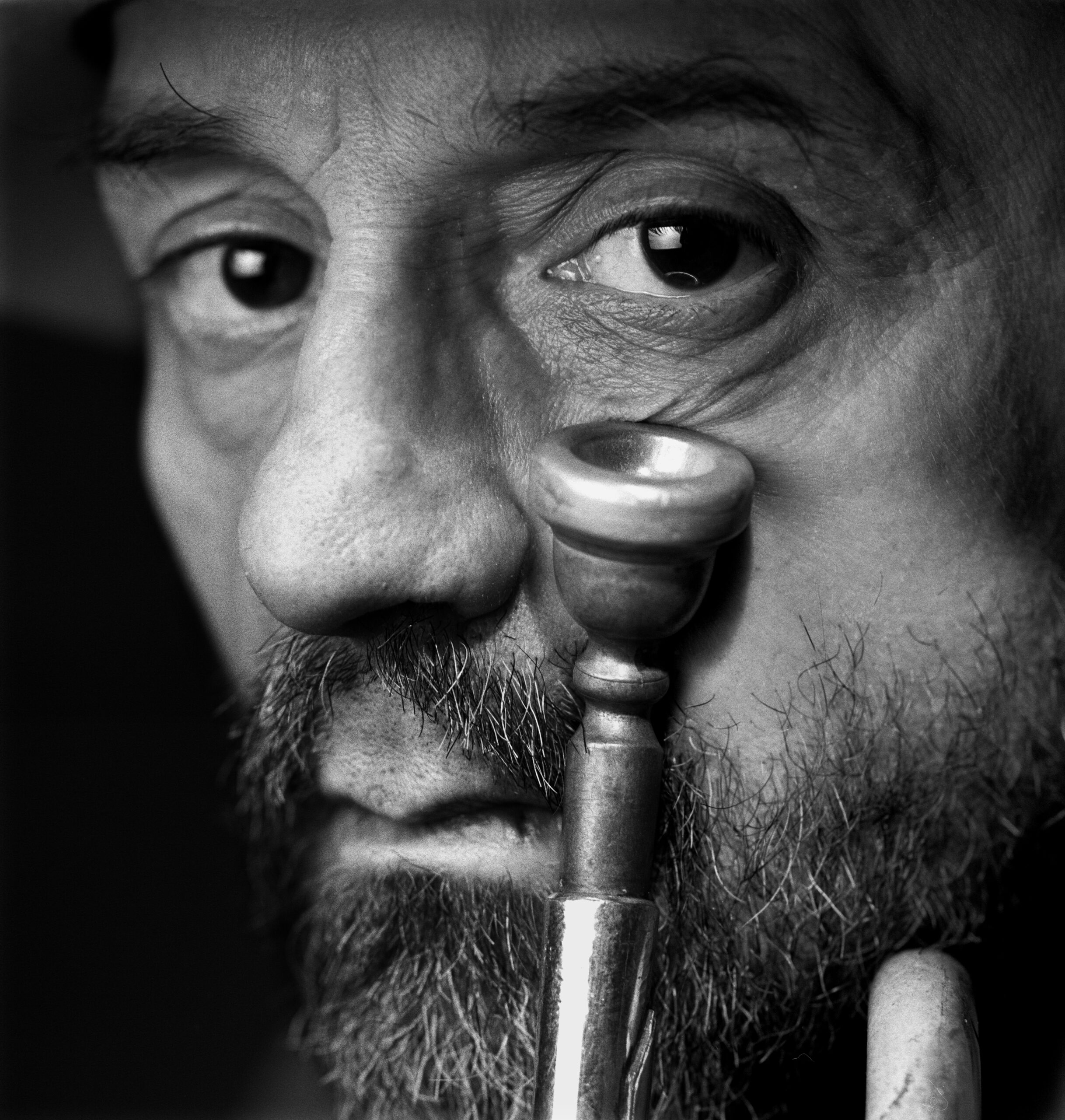
I often think back to the moment when, as a somewhat unfledged young writer, I was walking down Solec Street to an audience with Mr Tomasz. Breathless, late and ashamed of the fact that I was about to hand him a case of Red Bull, under which auspices our meeting was taking place, I was completely unable to gather my thoughts. My indecision faded in an instant the moment the first effortless joke was made, the distance between us dissolved imperceptibly, and I found myself locked in his focused, penetrating gaze; a charismatic, profound gaze reflecting confidence, experience and, above all, an insatiable curiosity about the world that then stood in front of him in the form of… me, the small and insignificant. The next two hours, in hindsight, became a cornerstone of my journalist career, a masterclass in deliberate openness, conscious freedom of thought, and clarity of vision that allowed him to see far, far ahead, time and time again. I am drawn to diversity itself. I am inspired by these crazy, exciting times. The way I look at artists from completely different backgrounds working together, how different genres blend and intertwine — that’s the first part of an interview that appeared in Red Bulletin magazine in 2011, and today, thirteen years later, it remains just as relevant. In fact, given how much the music market has changed since then, it might even carry more weight now. Tolerance, which is so crucial in life, is also incredibly important in art. Sometimes, it’s worth stepping out of our comfort zone to listen to something unfamiliar, to cultivate a genuine respect for other perspectives. Even when disco polo is playing, sometimes you have to sit down and listen intently; try to understand the intentions of those who created it, because they were surely good. Every day, we should practice our openness to art, rather than always rely solely on reason and tradition.
I never really got into Stańko’s work; I never focused enough to dig through it all, listen deeply, and take from it what I’d want. I actually remember one particular experience from one of the Jazz Autumn festivals. I was either in the final years of primary school or just starting middle school, and I was already kind of getting into jazz, even starting to play a bit. So I went to his concert at the BCK. I loved the opening act; it was lively modern jazz. Then Mr Tomasz came on, played a few notes on the trumpet and started messing around with the valves… WHAT IS THIS?! That’s supposed to be his festival?! I have no idea what’s going on! I’M LEAVING! — Jan Pieniążek recounts, reliving these youthful emotions. A student at the Stanisław Moniuszko State School of Music in Bielsko-Biała, he was named Young Musician of the Year 2020 in a competition organized by TVP Kultura and the Ministry of Culture, National Heritage and Sport. He’s one of the most interesting drummers on the contemporary jazz (and beyond) scene; a dynamic and charming rhythmic force behind bands like USO 9001 and Kosmonauci, as well as a member of various improvised projects, both fleeting and enduring. And so I stayed away for years, until just last year when I had a revelation. Envee invited me to join the project “Stańko Na Głos (Stańko Out Loud).” When I heard snippets of Stańko’s interviews, which formed the basis of this whole production, it hit me: WHAT A SHAME, how had I missed this? I hadn’t realized what an important figure he was, not only in music but also in philosophy. What he said in those short clips nailed the essence of what I do and why I do it. Since then, I’ve started to connect with his work in my own way, though not strictly musically. He’s a guiding spirit, not only for jazz but for all music, especially our local Polish music.
Tomasz Stańko’s presence in the media, unlike any other jazz musician, offered a rare platform to discuss essential and universal issues in mainstream press, radio, and television. With his clear-eyed vision, he could express reality in pithy, vivid metaphors, seeing in tones, melodies, and rhythms a reflection of broader connections, insights, and ideas. Because most people who tend to listen to music in a very focused, deep way eventually become philosophers. Perhaps, though, it was their philosophical inclination that led them to engage with music in this particular way — Michael Faber wrote in the introduction to David Toop’s remarkable book, Ocean of Sound, and Tomasz Stańko was a prime example of this connection. A perfect example of this is another excerpt from our 2011 conversation; a statement that brilliantly engages in dialogue with today’s world and the reflections of Jan Pieniążek just quoted. The age of masters has now passed, replaced by something akin to Balinese culture — a broad spectrum of people is interested in art, some create it, and others consume it. It’s a different form of artistic expression: accessible, diverse, and multifaceted. There’s no demand for masters, teachers, or gurus anymore, as everything is within reach. You can learn anything yourself, decide for yourself on everything. The ability to self-educate is becoming essential — Tomasz said at the time, with his usual animated energy, avoiding the all-too-common judgmental tone that “things used to be better.” Most things today look similar; only the initiated see the nuances. While mainstream productions may seem similar at first glance, even a basic understanding of music reveals a vast gulf between the craftsmanship of producers like The Neptunes or Timbaland and that of typical pop hits. I think that back in Leonardo’s time, there were also legions of artists, but only a select few had the opportunity to reach an audience. Today, it’s different. All matter has just one tendency — to grow more complex. From the Big Bang, when the first electron began to spin, the first atom formed, the first element, the first life form… until, suddenly, we had Beethoven, circulating in the air. He was, after all, just a compound of carbon, yet with such a unique chemical or structural composition that his brainwaves created the music we still know today.
We always used to go to the Jazz Autumn together, and I was just like Pieniądz — I didn’t understand a thing, I didn’t know what he was talking about when he let out those three sounds and… I didn’t leave only because my mum, who is also a big jazz fan, always told me: listen, you’ll learn a lot, says Miłosz Pieczonka, another alumni of the young Bielsko-Biała jazz scene, whose foundations are Stanisław Moniuszko State School of Music and two opinion-forming jazz festivals. Living between Warsaw and Berlin, the barely twenty-year-old saxophonist released his solo debut last year — recorded in a trio with Leeny Rehm on drums and Pascal Jarchow on double bass, the frenetically romantic album titled Asleep: A few years later, I got accepted to the International Jazz Platform workshop in Łódź for the first time, and it was there that Dominik Wania gave us Logan Richardson’s and just Stańko’s pieces to play. The former were mega-scripted, polyrhythms, markers, a whole lot of notes, and the latter consisted of two melodies, a treble clef and… that was it. That was a WOW experience for me and it really cracked my mind open. It may seem obvious to me today, but it was then that I was first confronted with how much of this music is made live — ever since that day, whenever I went to the Jazz Autumn or any other festival or concert, I began to imagine what they had written down there on those music stands, and what they were then throwing in on top of that, in this constant dialogue with the venue, the time and each other. The USO 9001 and Kosmonauci bands (both featuring Pieczonka and Pieniążek) were forged within the Bielsko jazz ferment which is completely unique in Poland, but which also grew out of modern musical eclecticism and genres in which there is often nothing on the music stands. For there are no music stands, and the people making those recordings don’t usually know how to read music. The hip-hop coda closing Sorry, Nie Tu and the various electronic inspirations flowing through Rhesus Albert come precisely from these places — areas of constant burying of the canon and the mésalliance of high and low art (sic!).
And although these processes have been going on for decades, they have accelerated dramatically in recent years. Through his output recorded in 2011 in his flat in Warsaw’s Powiśle district, sixty-nine-year-old Tomasz Stańko has something to add here: Timbaland, Pharrell Williams, all those groove guys work with nuances. Their productions are packed with sophisticated subtleties and ideas. That’s exactly what I love about pop culture. For one person, a hit might just be a dance anthem, while someone else might see a deeper layer in it. I used to listen to a lot of Roni Size. The way he selects sounds, how he finds tones. He probably spends entire days digging through sounds, focusing only on groove — the good spirit of this text and of the contemporary (over)jazz scene told me then, with youthful enthusiasm in his voice. And although the examples he used were already the cult classics of beat music at the time, many still fail to give them proper attention, clinging to an outdated analytical approach that only examines instrumental mastery and the complexity of the composition. Enthusing over new technologies, passionately defending sampling and auto-tune, and reminiscing about his own adventures in quoting others’ music, Tomasz meanwhile would pause repeatedly to ask me what I was listening to at the moment, what I recommended, and what else, beyond Flying Lotus, he should jot down in his well-worn notebook. Several times he noted that rather than spending hours a day on his trumpet, he’d prefer to dedicate that time to immersing himself in sound, listening to music, because the truth is that practice can dull the mind. Only the best, those who know how to approach it right, can avoid getting numb, he’d say. To achieve a virtuoso level on the violin — or even to draw a single clear phrase from it — requires years of practice. Producers working with computers and synthesizers can use that time differently; on nuances or tones. These things are just as essential, and there’s no point in undervaluing them. It’s also a form of learning, a kind of self-education.
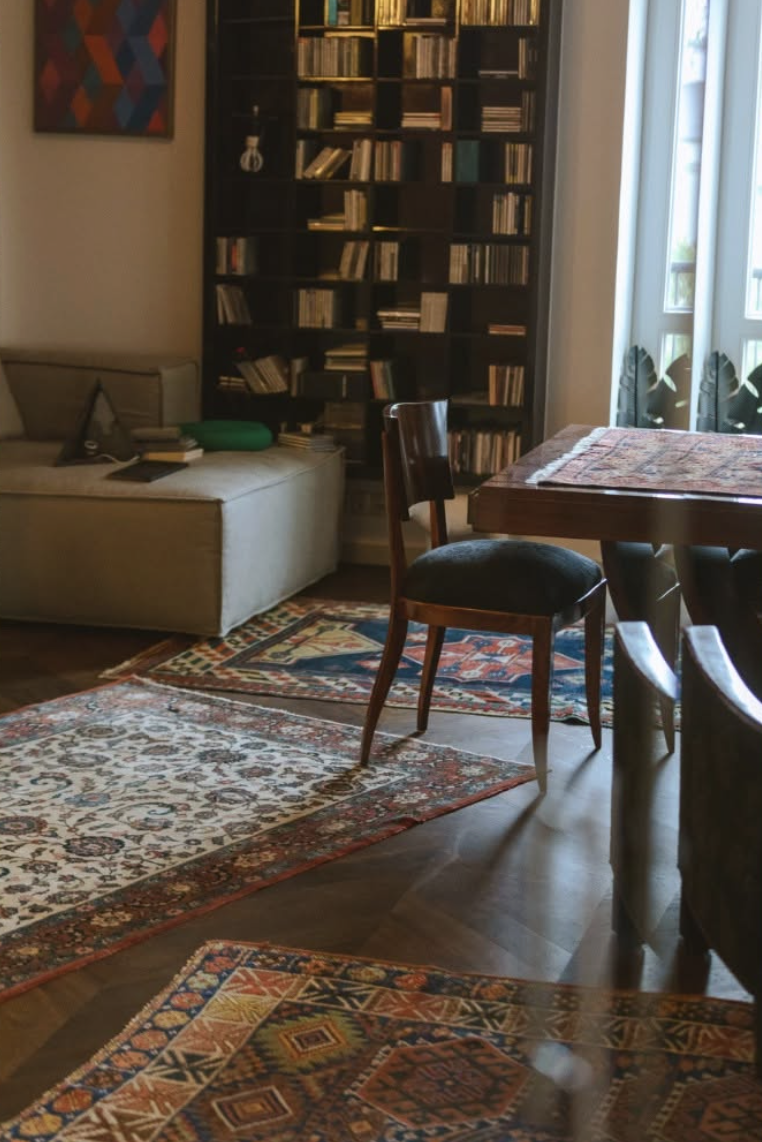
Since we’ve already mentioned Mr Tomasz’s apartment several times, and since USO and Kosmonauci would probably sound quite differently if not for their slightly older colleagues, it’s time to bring up people in this text who know Stańko’s legacy in its entirety; in fact, until recently, they even knew recordings that not even the most dedicated jazz record collector had the chance to hear. Not only did Astigmatic Records take its name from the LP on which the trumpeter recorded some of his most recognizable phrases, but in recent years, they also released two volumes of Wooden Music — recordings from an era of the quintet with Seifert, Muniak, Suchanek, and Stefański that had been long-lost in the archives. The work put into this release, meanwhile, prepared the EABS crew to confront the giant’s legacy with their own interpretation of Purple Sun, recorded under the roof of one of the tenements in Warsaw’s Solec district. It wasn’t easy; we had to get into the right mindset. I came there thinking, okay, I’m here to breathe the air from this place into the music, to somehow capture that aura. Because it was his space after all; everywhere around us there were things belonging to that great man who lived, created, and inspired each of us at various stages and in different ways. It was strange, but I kept telling myself that Tomasz Stańko was an open enough person that he’d probably have liked it. That the place is still alive with creative energy, that various thought and creative processes are happening there just as they used to on a daily basis, states Marek Pędziwiatr, recalling the recording session for the album Reflections of Purple Sun, which took place in the very apartment I had once rushed to, out of breath and late, lugging a case of energy drinks. EABS, in fact, had countless reasons to engage with this material — the figure of Tomasz Stańko had been indwelling them during the work on the album Repetitions (Letters to Krzysztof Komeda), the book accompanying the album Slavic Spirits, and their live performance of Zbigniew Seifert’s repertoire; in fact, years ago, there was even a plan on the horizon for a joint concert in Mosina. The pianist, composer, and quietly charismatic leader of Electro-Acoustic Beat Sessions, together with Sebastian Jóźwiak — the behind-the-scenes team member who doesn’t play an instrument — quickly delve into passionate and impossible-to-transcribe details.
Our conversation stretches over an hour, covering comparisons between the concepts from Purple Sun that appear in the second volume of Wooden Music and the canonical album release, as well as a discussion on whether Astigmatic might actually be Poland’s A Love Supreme, i.e., the most spiritual Polish jazz album of the 1960s. At the end of this discussion, however, we reach a key issue in Tomasz Stańko’s legacy — how he embodied the distinctly Polish dichotomy of Romanticism versus Positivism. I feel that Stańko’s international career was largely due to the distinctively Polish qualities he embodied. Perhaps it was precisely this cultural distinctiveness that the world loved — his Romantic spirit combined with a Positivist dedication to hard work, which he committed himself to after breaking free from his addictions. He was never once ashamed of his Polishness, even though many other representatives of the older generation underwent a certain Americanization. Meanwhile, many young musicians are blinded by the pursuit of this so-called “world-class level,” which I honestly have no idea what it means, says Sebastian Jóźwiak, who wrote an extensive booklet on how this very Polishness manifested in the popular music of the second half of the 20th century, the booklet that accompanies the limited edition of Slavic Spirits LP. A reflection on our national character, meanwhile, accompanies most of the recordings produced by the Astigmatic crew, whether they release their work under the names EABS, Błoto, or Zima Stulecia.
And here again I’ll turn to a quote from my first meeting with Tomasz Stańko, who told me about how his fascination with jazz lifestyle was eventually overshadowed by a love of the music itself, of the sounds in which this one particular man who just happens to be playing resonates. Jazz was to me what the Jazz Age was to F. Scott Fitzgerald. It wasn’t just music but also a way of life, a synonym for Western culture and a symbol of freedom. Besides the beauty of the sounds, it was these things that made me immerse myself so deeply. In the beginning, maybe these things attracted me even more. The vividness and fullness of life contrasted with the bleak reality of communist Poland: the clothes, the jackets, the American style — jazz and Coca-Cola, as our enemies would say. When we met, Komeda was told that “Korea is burning to the sounds of jazz, and Trzciński here is playing that very music.” Although I was from a later generation, I still brushed against those realities, and, having a tendency toward anarchism and opposition, I quickly and strongly became involved in jazz. And once I started getting into it, that’s when I was truly captivated by the beauty of this music, and it still captivates me today, he recalled in Red Bulletin, shortly afterward referring to a specific example of how American-derived influences become localised and take on a unique context: When I improvise, I often refer to something I’ve heard before. I feel that if I used a bassline from Coltrane’s Africa/Brass, it would already be mine. By taking a part of a whole, I would inject my own feeling into it, and it would become something completely different, a material for me to work with. That sound or melody would pass through my mind and become a part of myself. When I was going through my divorce with my wife, Joaśka, we listened to Stevie Wonder. I still remember that melody vividly, and whenever I hear it somewhere, it reminds me of that feeling. If I put it into my own piece, it would have a completely different meaning; it would mean something else entirely and become my own piece.
What fascinates me most about this (for lack of a better term) new wave of Polish jazz, from the first EABS albums to Generacja JAZZ — an attempt to capture an even younger generation on a compilation released by U Know Me Records — is precisely the human being. Their experiences, tastes, emotions, their place in the world, and the time they create in seem incomparably more important than any genre definitions. In fact, when I was writing the liner notes for the cover of USO 9001, the musicians specifically asked me not to use the word jazz even once. Much like the Polish music scene of the 90s — headed by yass and Lado ABC — the young blood resists simple categorizations and outdated textbook definitions. However, unlike those previous movements, they distance themselves from the humour and irony that fueled much of the scene’s work back then. Though not always consciously and only occasionally directly, this brings them closer to the Polish Jazz circle, with Tomasz Stańko seeming to be the most significant point of reference. So, as more tags with the classic label’s logo appear in the streets of Warsaw, not only does Reflections of Purple Sun hit the stores, but also Better by Tomasz Dąbrowski and the band The Individual Beings, and Maciej Obara reinterprets the master’s repertoire in his Bluish Landscapes project.
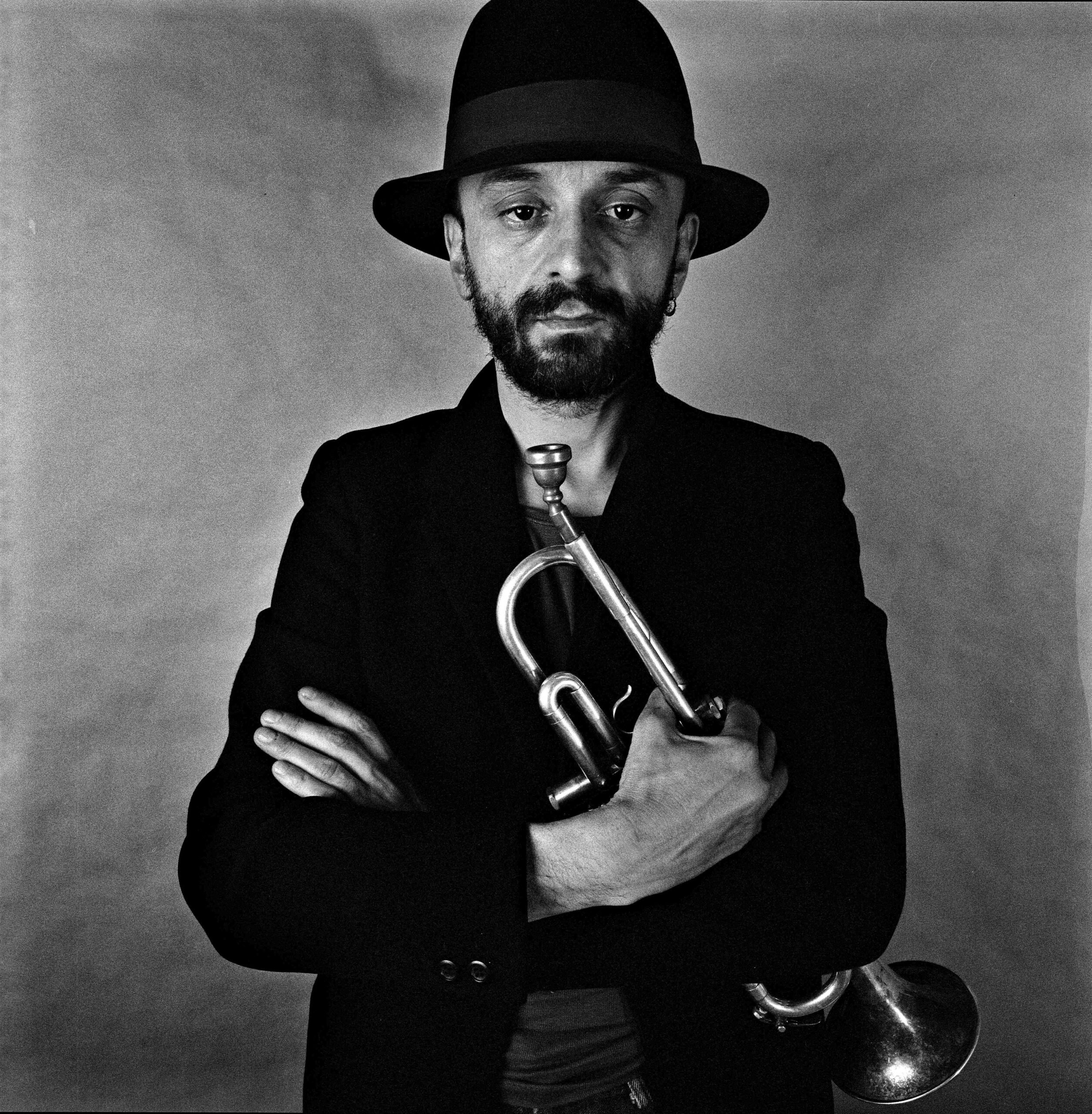
Because sometimes you get along better with your grandfather than with your father — you’re more interested in what he’s experienced, you can learn more from what he says, and the emotions that connect you are a bit less explosive, says Sebastian Jóźwiak, then immediately refers to the aforementioned dynamics of the Polish scene in the 90s: Stańko’s influence at that time couldn’t yet be as great because he was still alive and creating. His career had just been rekindled after he overcame his previous habits and signed a contract with ECM. People are especially drawn to this period, characterized by its melancholic tone, seriousness, and profound Polish identity. And this is where the grandfather who fought for Poland comes back in, while the father would usually have a post-communism hiccup and just look longingly towards America — watching films on VHS, daydreaming about a from-rags-to-riches type of career. By creating music that’s intensely local, exceptionally personal, and completely devoid of any inferiority complexes, young Polish jazz is meanwhile handling itself with increasing confidence abroad. And it’s worth noting, not only within a genre niche but also in the vast realm of multi-genre music. New releases under the Astigmatic Records label are making waves in global media, selling out in international stores, and this year’s Kosmonauci tour stretches from Berlin to Riga and Zagreb. I don’t even know how many things I can do now because Stańko had done them first, but I’m sure it’s a shit ton, says Jan Pieniążek, while somewhere up there, Mr Tomasz is probably smiling in his signature, roguish way. And although all the swear words were cut from our conversation for Red Bulletin, there was definitely a juicy, resounding kurwa somewhere in that quote as well: Jazz continually rejuvenates and transforms itself. It’s laid the groundwork for many new trends in art, creating the foundation for pop culture, which today reigns supreme. Looking at artists who, in their experiments, distanced themselves from the audience and are now returning to it, I’m pleased with how things have developed, he said in 2011, and his words resonated with nothing but joy, curiosity, and optimism. Old genres still exist, because in music, as in life, there are no sharp boundaries. Generally, though, capital-A Art — in which masters like Leonardo da Vinci or Picasso once reigned — is becoming a thing of the past. It’s beginning to take on a new form, and has a different character. We must consider phenomena like Lady Gaga or blockbuster films: productions where craftsmanship is no longer the main focus. Pop culture is very expansive, but it’s also beautiful, fair, and considerate of minority perspectives. I don’t understand these journalists who resent television for being made for everyone. After all, there are shows that aren’t run-of-the-mill. Maybe we don’t have enough satellites yet to stream exactly what we want. But we do have the buttons and free will. We can choose not to watch, not to listen; we can do whatever we want!